Life at Trinity · Our History
A brief history of Trinity
One of the oldest congregations in eastern St. Mary Parish — a mission that became a parish, and a little church that outlasted everything the bayou threw at it.
One of the oldest congregations in eastern St. Mary Parish — a mission that became a parish, and a little church that outlasted everything the bayou threw at it.
Morgan City's Trinity Episcopal Church was founded in 1874, in what was then the Town of Brashear. What follows is our story in brief, as the congregation itself has told it — drawn from the church's own published history.
Trinity began as a mission of the Louisiana Diocese of the Protestant Episcopal Church in the Town of Brashear. Dedicated members and generous benefactors sustained the young congregation through the hardships of Reconstruction and the terrors of yellow fever. Services were led by visiting priests from Franklin, Thibodaux, and Houma, and the congregation kept an active Sunday School through it all.
In 1876 the present church property was purchased for three hundred dollars, raised through donations and "entertainments." A schoolhouse followed — completed March 2, 1878 — which doubled as a place of worship and served the whole community at a time when the public schools had closed for lack of funds. Sixty students enrolled.
At the turn of the century the "shotgun"-style building was moved a short distance to the church's present location. A chancel was added, the interior and exterior refinished, and the church completely furnished — with native cypress lumber used extensively, to lasting effect.
Trinity was remodeled with the old St. Andrew's Church in New Orleans as its model. The project was funded by generous contributions from Presbyterians, Roman Catholics, Methodists, and Jews as well as Episcopalians — a whole town, of every faith, putting its church back together.
A rotation of priests from the "parent churches" in Franklin, Thibodaux, and Houma served Trinity through 1941, when the congregation formed a mission council and began seeking a full-time rector and a parish house. The rapid growth of the offshore oil industry after the Second World War enabled the church to expand and flourish.
In 1956 Trinity called its first resident priest. The next year, Trinity Episcopal Church was proudly granted a charter conferring long-desired parish status. In the decades since: the parish house and rectory were built, needlepoint kneelers were lovingly made by the Altar Guild, stained-glass memorial windows installed, and a bell placed in the belfry to call the faithful to worship. The charter was also amended — first to encourage women's participation on the vestry, and later to permit women to serve as wardens. Since 1958, Trinity has been guided by seven rectors.
This historic church remains, as ever, dedicated to the Holy Trinity and to the time-honored Anglican Communion — and to the neighbors of Morgan City, every Sunday at 9:30 AM.
This history rests in large part on the research and writing of Roger Busbice — the "1999 Revision by Roger Busbice" printed in the church's trifold brochure. Roger was a wonderful and beloved member of this congregation: an amazing man who knew so much of Trinity's history — and what he didn't know, he would go and find out. Because he cared enough to chase down our story and write it down, that story is still here for the generations who follow. We are grateful for his work, and we remember him with love.
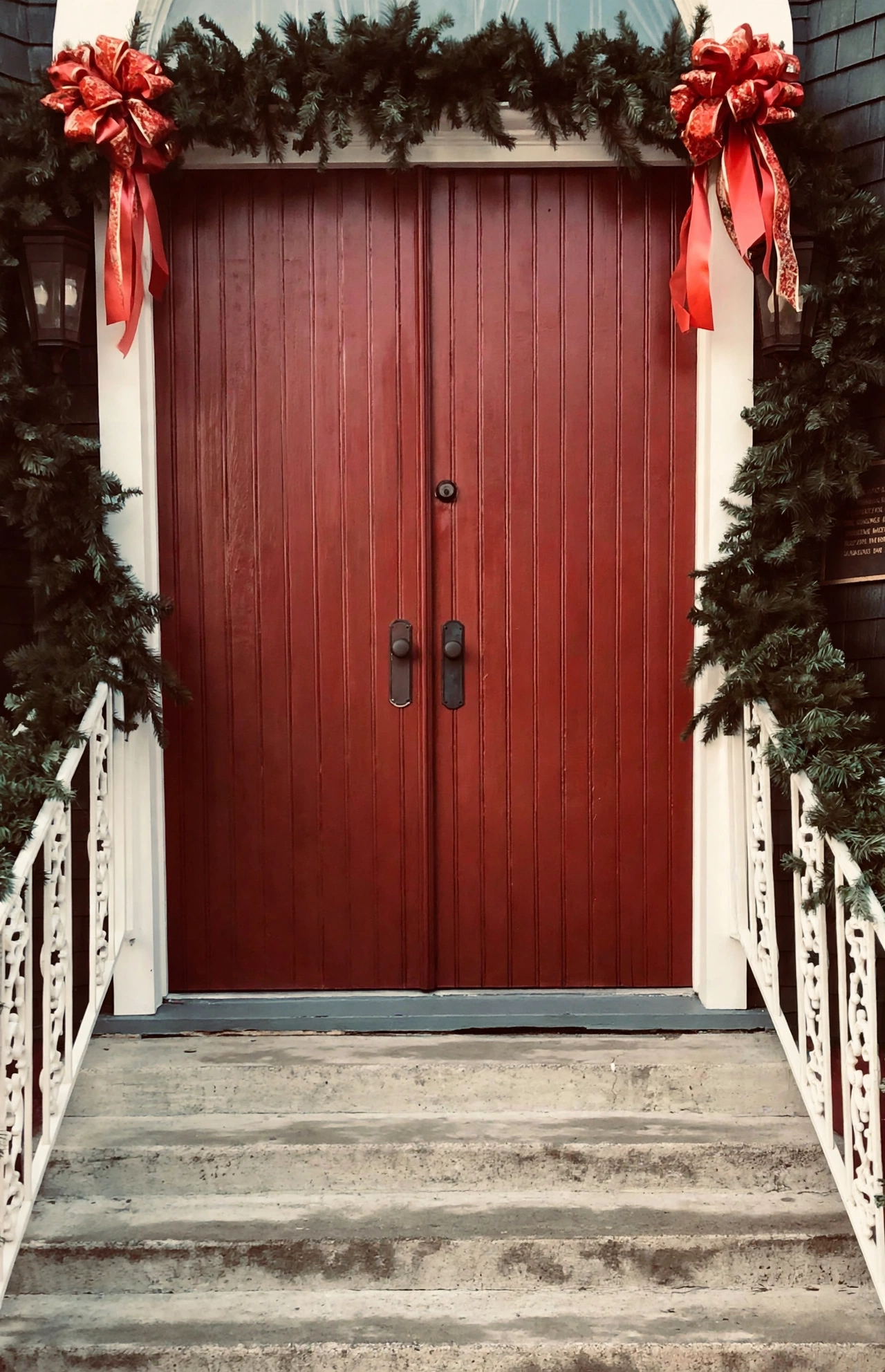
Trinity is famous as the little green church — yet according to our church secretary, Peggy Coates, the building's original color was red. When it changed, and why, nobody has yet found in the records. Peggy is searching the church archives, and our newsletter has invited parishioners to share old photos, stories, and memories that might solve it.